
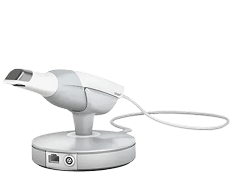
3D Scanner (Trios)
Our TRIOS 3D scanner allows us to create highly detailed digital impressions of your teeth and gums—without the mess or discomfort of traditional impression materials.
Using a small handheld scanner, we capture thousands of images in seconds to build a precise 3D model of your smile. This digital model helps us plan treatments with exceptional accuracy and efficiency.
The TRIOS scanner is commonly used for procedures such as Invisalign, veneers, crowns, and smile design. Because the impressions are digital, they can be shared instantly with dental labs and used to design restorations that fit comfortably and look natural.
Benefits of the TRIOS scanner include:
- No messy or uncomfortable impression trays
- Faster and more accurate digital impressions
- Improved precision for restorations and aligners
- Enhanced visualization of your smile and treatment plans
This technology helps ensure that every restoration or cosmetic treatment is designed specifically for your unique smile.
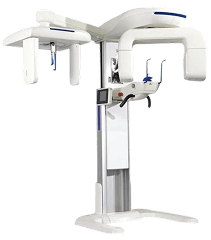
Digital Radiographs
Digital radiographs (digital X-rays) allow our team to evaluate your teeth, bone structure, and surrounding tissues with greater clarity while using significantly less radiation than traditional X-rays.
These high-resolution images appear instantly on our monitors, allowing us to quickly assess your oral health and discuss findings with you during your visit. Digital radiographs help us detect issues that may not be visible during a visual exam alone, such as:
- Cavities between teeth
- Bone loss related to gum disease
- Infections or abscesses
- Impacted teeth
- Changes in tooth structure
Because the images are digital, we can enhance and enlarge them to provide a more detailed view and help patients better understand their diagnosis and treatment recommendations.
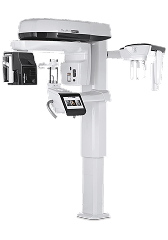
CBCT
Cone Beam Computed Tomography (CBCT) provides advanced 3D imaging that allows us to see the teeth, bone, nerves, and surrounding structures in remarkable detail.
Unlike traditional two-dimensional X-rays, CBCT creates a three-dimensional view of your oral anatomy. This allows for highly precise diagnosis and treatment planning, particularly for more complex procedures.
CBCT imaging is especially valuable for:
- Dental implant planning
- Evaluating bone structure and density
- Diagnosing infections or pathology
- Assessing impacted teeth
- Examining jaw and sinus anatomy
With this technology, we can plan treatments with a higher level of safety and accuracy, ensuring that procedures like dental implants are placed in the ideal position for long-term success.
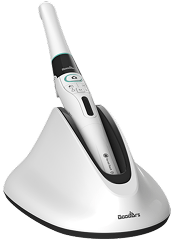
Intra-Oral Cameras
Intraoral cameras are small, high-resolution cameras that allow us to capture detailed images inside your mouth. These images are displayed on a screen so both you and your dentist can clearly see what’s happening with your teeth and gums.
This technology improves communication and transparency during your visit. Instead of simply describing a concern, we can show you exactly what we’re seeing.
Intraoral cameras help us:
- Detect early signs of cavities or fractures
- Monitor wear, gum health, and existing restorations
- Document changes in your oral health over time
- Educate patients about treatment recommendations
By giving you a clear visual understanding of your oral health, intraoral cameras empower you to make informed decisions about your dental care.